
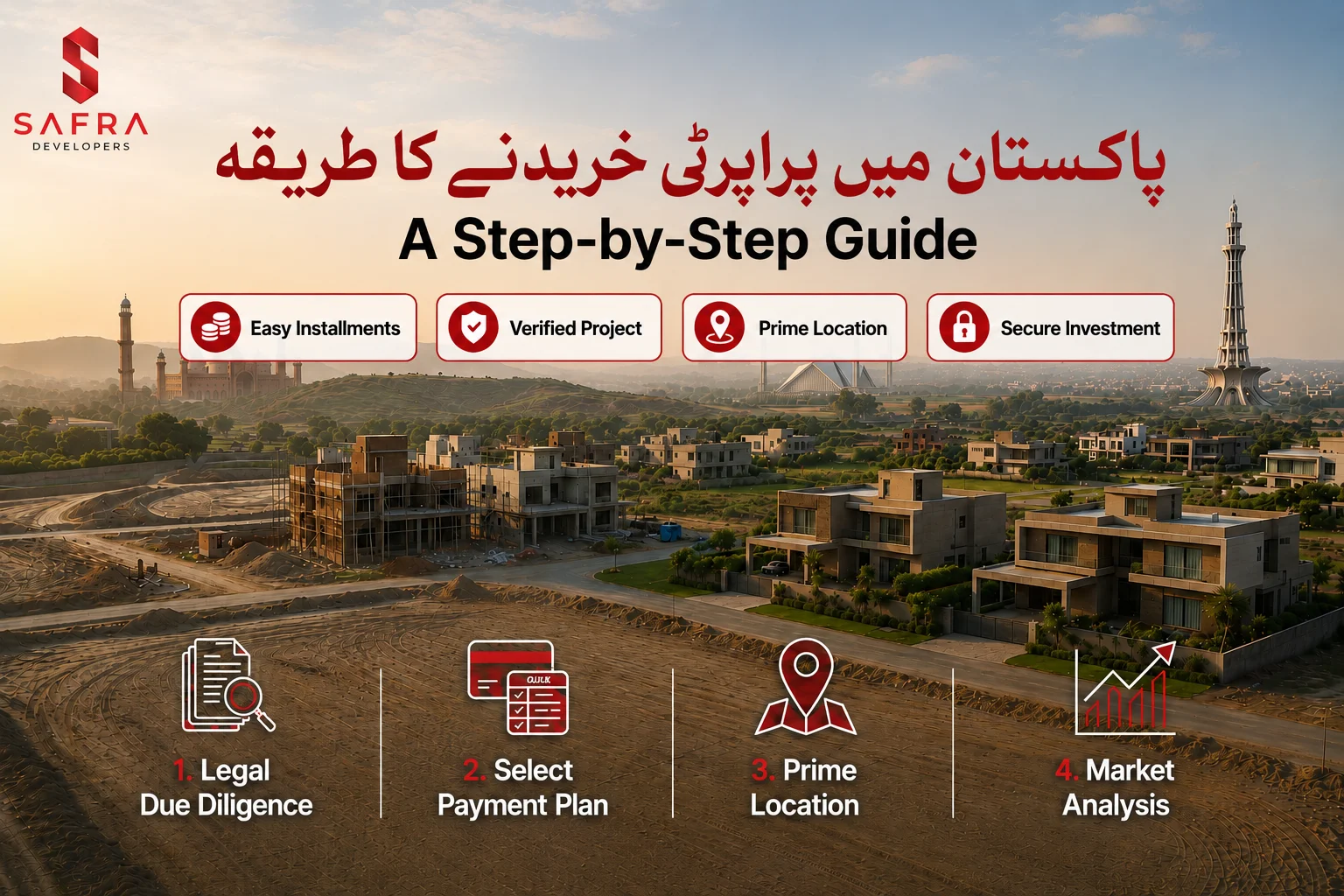
When considering multiple investment options, real estate emerges among top choices due to an ever-growing industry. Even if not investing, property purchase is the most valuable asset every Pakistani seeks to own. However, not having sufficient know-how of the process can lead to damaging mistakes, disputes, and even property scams. To make sure, none of these unfortunate events occur, basic information related to the process is necessary. This article will, therefore, provide a step-by-step guide on how to buy a property in Pakistan.
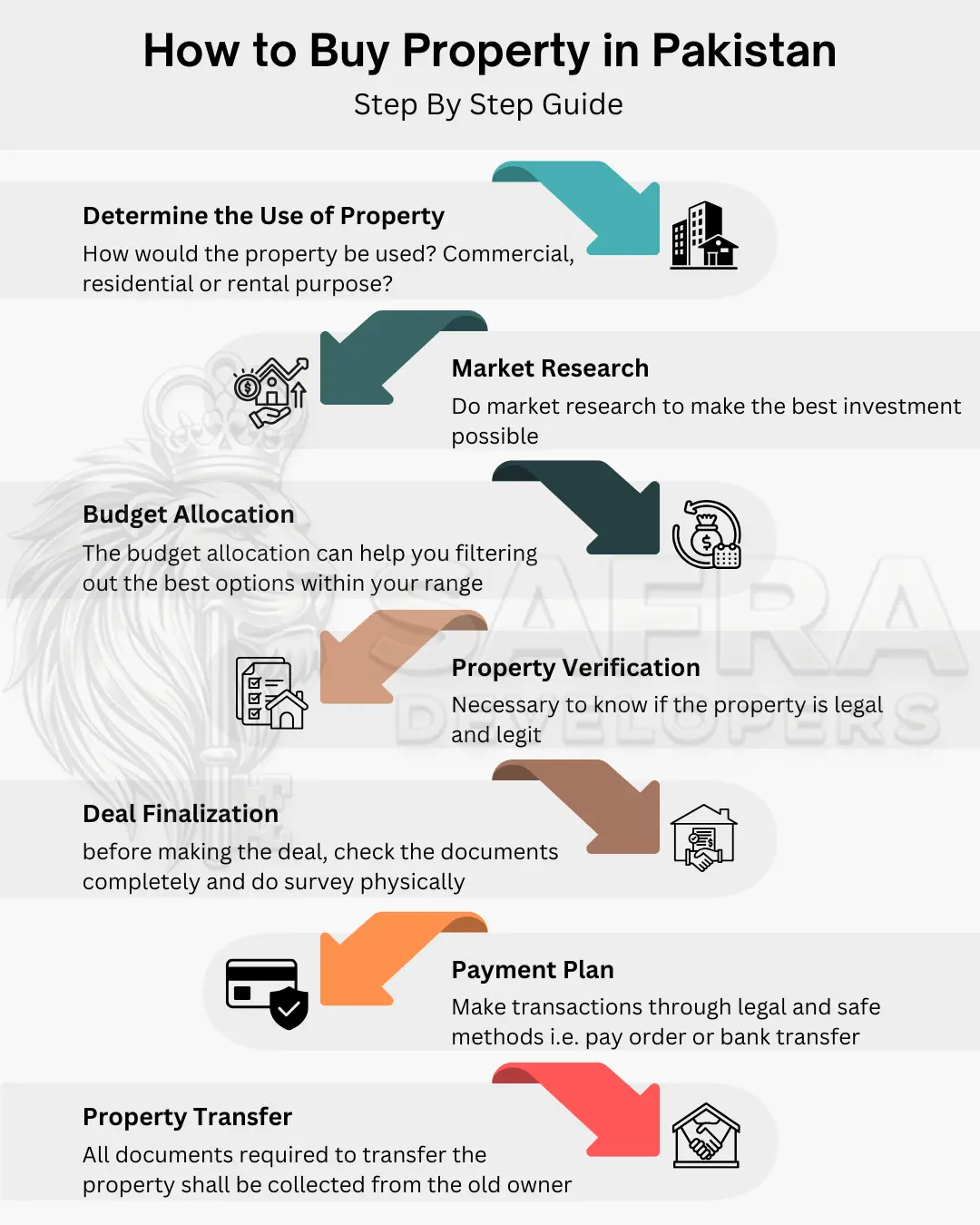
Step-By-Step Guide On How To Buy Property In Pakistan
1. Determining Intended Property Use
Purchase of any property depends on whether the property to be bought will be used for commercial, residential, agricultural or rental purposes. Each property use is associated with different prices, location, taxes and relevant real estate agencies to approach.
2. Market Research
Every investment requires understanding of market dynamics. It is important to go through current market rates, future growth potentials and customer demands to make the best possible decision regarding purchase or investment. Such market research can be conducted through online platforms such as Zameen , Graana or OLX providing lists of authentic and legal properties available. Additionally, expert help from real estate agents can also contribute to a better insight in property market. Participating in real estate expos conducted by various agencies can also be another way of gaining market info.
3. Budget Allocation
Selection of property becomes a lot easier when the budget to be used is pre-determined. It can act as a filter while looking for available options and can maximize decision output by choosing most benefits within the budget decided. Budgeting does not only involves considering property price but a number of additional costs which can be
- Registration Fee
- Stamp duty
- Withholding Tax and Capital Value Tax
- Real estate agents commission
- Legalization costs
When putting aside a considerable amount for the costs mentioned above it is advised to keep some extra amount as a margin for any unexpected additional cost.
4. Property Verification
The next step is to verify if the selected property is legal and does the owner have complete rights of the property.
This involves:
- Ownership Verification: This can be checked through title deed, allotment letter, fard. Also look into the CNIC of the owner to determine his authenticity.
- Property Legality: For this look into the NOC provided by the relevant development authority which determines if proper government approval has been granted to the property.
5. Site Visits for Survey
Apart from document verifications it is important to personally visit the site and look for any faults that might not have been mentioned. Existence of the property and area told can be confirmed. The described amenities and utilities such as easy access to schools, hospitals via proper roads and availability of gas, electricity and water are there.
For a developed property, durability, installed systems such as wirings, waterworks and drainage systems can be checked. While for underdeveloped sites, material use can be inspected. Taking assistance from an inspector can be fruitful at this stage.
6. Deal Finalization
After verifying the legal status of the property and the owner followed by personal inspection and once full satisfaction is achieved , a deal is to be made. Here documenting every detail is critical to ensure scam-free transactions. Firstly a token money also known as bayana in local terms is to be paid. Secondly, a sale agreement is to be paid.
- Token Money: This is an amount of money paid to secure and to show intention to buy the property and is around 1-2% of the total property price. Receipts should always be collected after payment to authenticate the process and to obtain proof.
- Sale Agreement: This is an official agreement between the buyer and the seller. It should include but not limited to:
- Details of the people involved in property transaction
- Price of the property
- Details of the property
- Payment plan
- Possession date
- Penalty stipulation
The sale agreement should be written on stamp paper which gives it a status of a legal document and is punishable in case of violation from any side.
7. Payment Plan
Once the sale agreement has been written the due amount needs to be paid. Transactions through cash are often discouraged since it does not maintain a money trail. This step should be conducted through bank channels preferably using prepaid instruments like Pay Order or Demand drafts.
8. Property Transfer
To officially gain the title of owner of the purchased property, a No Demand Certificate (NDC) needs to be obtained, registration of the property needs to be done and an allotment letter must be collected.
A NDC is a document issued by the relevant authority or the society in case of private housing societies documenting that all due charges required have been paid including relevant taxes, society charges etc. The taxes involved are Withholding Tax and Capital Value Tax. Here, filers enjoy their status as they pay comparatively lower taxes.
The Sub-registrar office or transfer office of the housing society is then visited for the registration. Here, required documents are submitted and a final sale deed is concluded.
Once the registration is complete, an allotment letter or a transfer letter is provided to the property buyer. The record is updated and the buyer is listed as the owner of the property.
Property transactions in real estate where they are attractive also are very risky due to multiple scams. Each stage requires great care and often expert help.
This article has provided a step-by-step guide on how to buy property in Pakistan. When being involved in any such process it is important to carry out market research to determine trends followed by personal visits. Looking into properties legal position, sellers authenticity and required documents is essential in fraud-free purchase or investment. Documenting each step, using bank transfers and collecting documents such as sale deed, NDC, allotment letter is crucial.
This is a difficult process and taking assistance from experts such as real estate agencies can make it easy. We here at Safra Developers provide complete guidance and assistance in related paperwork.