
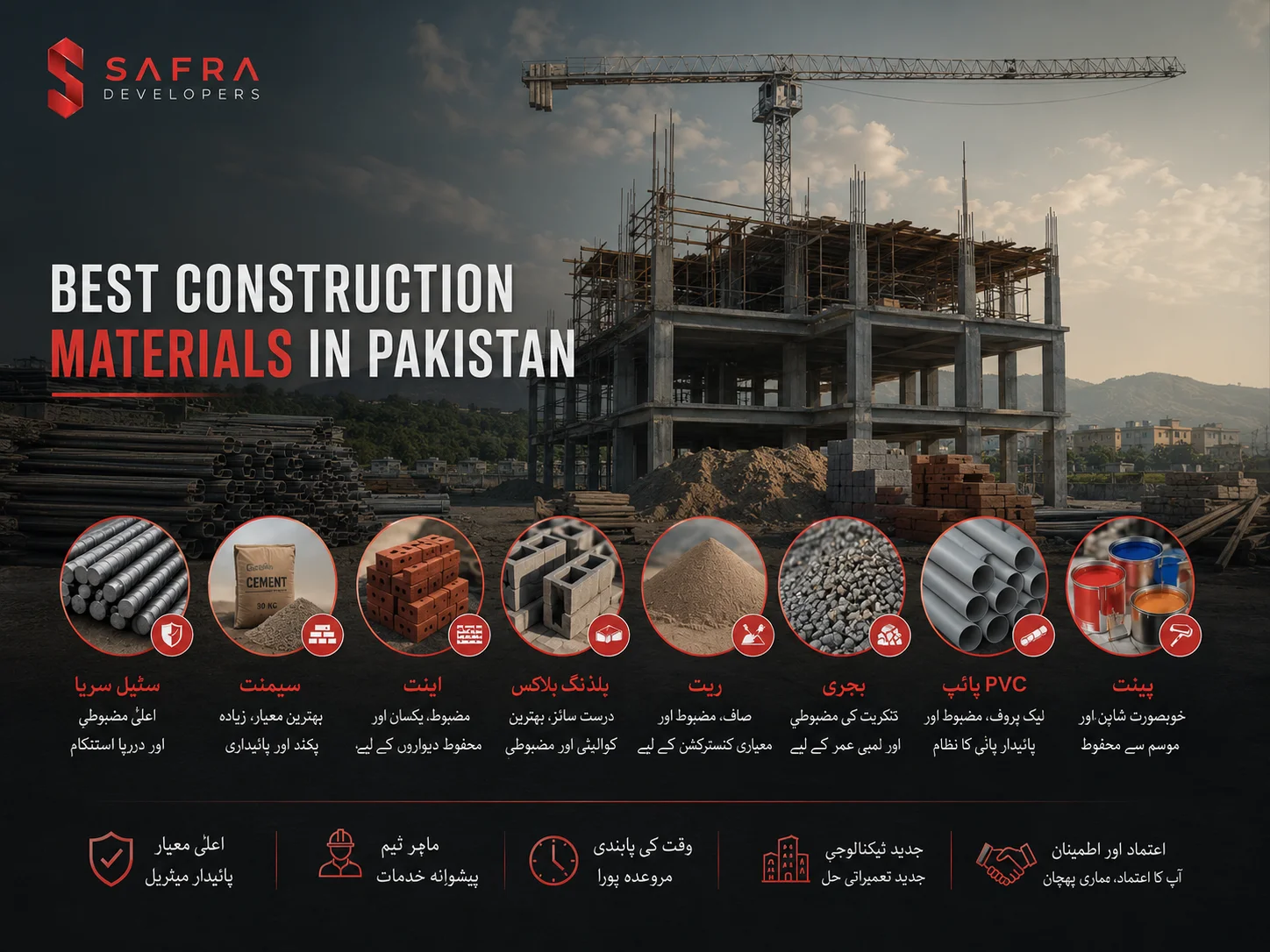
Pakistan’s real estate sector is experiencing growth due to several factors, mainly government actions such as the Punjab Property Law Amendments 2026, the Prime Minister Apna Ghar Program, and RERA. In such a scenario, it is important not only for investors but also for laymen to have an understanding of the best construction materials in Pakistan to make calculated decisions when investing or building a home.
In this article, we will cover the essential information on which construction materials are best and their details.
Best Construction Materials In Pakistan
1- Cement
Among the most important materials required for any form of construction is cement. It is because it acts as the binding agent holding together multiple construction materials and is the main substance in concrete. It holds the necessary compressive strength, giving the infrastructure its form and shape along with resilience.
In Pakistan, two main cement types are used:
- Ordinary Portland Cement (OPC)
- Sulphate Resistant Cement (SRC)
Most construction in Pakistan utilizes OPC, particularly grades 43 and 53. Pakistan has a very strong cement industry, the strongest in Asia. Pakistan has 20 cement plants all over the country, with the most famous brands including Lucky Cement, Fauji Cement, and Bestway Cement.
2- Steel
Steel is equally important as cement, as it provides the structural base for the cement to act. You can consider it similar to a skeleton in the human body. Steel is among the best construction materials in Pakistan, mainly due to the reason that the area is earthquake-prone and experiences frequent earthquakes, which makes its use necessary in every building.
In Pakistan, two main steel grades are used in construction:
- Grade 40 & Grade 60
Which grade should be used depends greatly on the load of the building. Normal construction often requires grade 40, while for large infrastructures, such as high-rise buildings, grade 60 steel is required. Steel is a very strong material, but it also requires great care since it rusts easily. The most famous steel brands in Pakistan include Amreli Steels, Ittefaq Steel, and Mughal Steel.
3- Bricks
Bricks are another part of construction raw materials in Pakistan, which act as the building blocks of the structure. The walls all consist of bricks stacked in order to provide maximum strength. In Pakistan, two types of bricks are used
- Burnt Clay Bricks: These are traditional red bricks made in kilns and are the most used type throughout Pakistan. They provide strength to the structure at an affordable rate. In Pakistan, intense heat is a major problem. This brick type reduces heat penetration through the wall, thereby providing good thermal insulation.
- Concrete Hollow Blocks: These are modern bricks hollow from within and are mostly used in new modern infrastructures. It is because they provide faster masonry, often speeding up the development work. These bricks reduce sound penetration through walls and so provide good sound insulation.
4- Aggregate
Sand and aggregate, though they seem minor substances, are essential as they act as fillers in concrete and mortar, influencing the durability and strength of concrete and mortar.
- Sand: In Pakistan, river sand is mostly preferred due to the durability it adds to the concrete mix. Sea sand is avoided since it reduces the long-term survival of the structure. Sand from Jhelum, Indus, and other rivers is used, but Chenab, Ravi, and Lawrencpur sand is most popular.
- Crushed Stone: The crushed stone, like cement, is a very important component of concrete mix and is used in the foundations of infrastructure. As the name suggests, this raw material is obtained by crushing large stones. Crushed stone from Sarghoda and Margalla is preferred around the country.
5- Glass
Glass is mostly required for windows, doors, and other interior designs of infrastructure. Sometimes glass is used as a structural feature and sometimes as an aesthetic source. The two main types of glass used in construction in Pakistan are:
- Tempered Glass: This is the most commonly used form of glass since it is strong and resilient.
- Double-Glazed Glass: This type is used in projects that require the glass to prevent heat and sound penetration across the rooms.
6- Wood
Wood is often required as a part of the infrastructure, such as for doors, windows, etc., or for aesthetic purposes, such as cabinetry, roof trusses. Most preferred woods are sheesham, deodar, and Kail, which are produced within Pakistan, making them budget-friendly.
7- Flooring
Different materials are used for flooring, such as tiles, marble, and granite. The type of flooring material should be used purely based on personal preference.
8- Roofing
Different roofing materials are utilized in construction across Pakistan. Some main types include:
- Clay tiles: These are traditional roofing materials that are budget-friendly as well. They can be of clay, ceramic, or asphalt. They are good heat-insulating materials, and because of this, they are mostly used in KPK and the northern areas of Pakistan.
- Metal Roofing: Steel and Iron are commonly used in many urban projects, along with some zinc and aluminium. The most famous metal roofing is corrugated sheets, which are easy to install as they are lightweight and strong due to their design.
- PVC: An emerging trend is the use of PVC materials in roofing, as they are lightweight and long-lasting. Also, they allow heating and cooling systems to work efficiently.
| Category | Types / Grades | Applications | Key Benefits | Brands / Sources | Summary |
|---|---|---|---|---|---|
| Cement | OPC Grade 43 & 53, Sulphate Resistant Cement (SRC) | Binding agent in concrete; infrastructure | High compressive strength; strong bonding | Lucky Cement, Fauji Cement, Bestway Cement | Primary binding material widely used across Pakistan |
| Steel | Grade 40, Grade 60 | Structural framework; high-rise buildings | Earthquake resistance; durability | Amreli Steels, Ittefaq Steel, Mughal Steel | Essential for strong structural support |
| Bricks | Burnt Clay Bricks, Concrete Hollow Blocks | Walls and structures | Thermal insulation (clay); soundproofing (blocks) | Traditional kilns; modern manufacturers | Clay bricks are common; blocks allow faster construction |
| Sand & Aggregate | River Sand, Crushed Stone | Concrete mix; foundations | Durability: long-term strength | Chenab, Ravi, Lawrencepur, Sargodha, Margalla | Key material for high-quality concrete |
| Wood | Sheesham, Deodar, Kail | Doors, windows, cabinetry | Aesthetic appeal; cost-effective | Local production | Preferred for interior finishing |
| Roofing | Clay Tiles, Metal (Steel/Iron), PVC | Roofing structures | Heat insulation; lightweight; durable | KPK & Northern areas (clay tiles) | Suitable for different climates and needs |
| Glass | Tempered Glass, Double-Glazed Glass | Windows, doors, interiors | Strength; thermal & sound insulation | — | Improves aesthetics and energy efficiency |
The selection of the best construction materials in Pakistan can be tough, but the right decision can make your development last longer with lower maintenance. The main building materials can be traditional or modern. This selection can vary with budget, preference, location, climate situations, and property use. The best materials are mostly those that have great quality and provide resilience to the structure.