
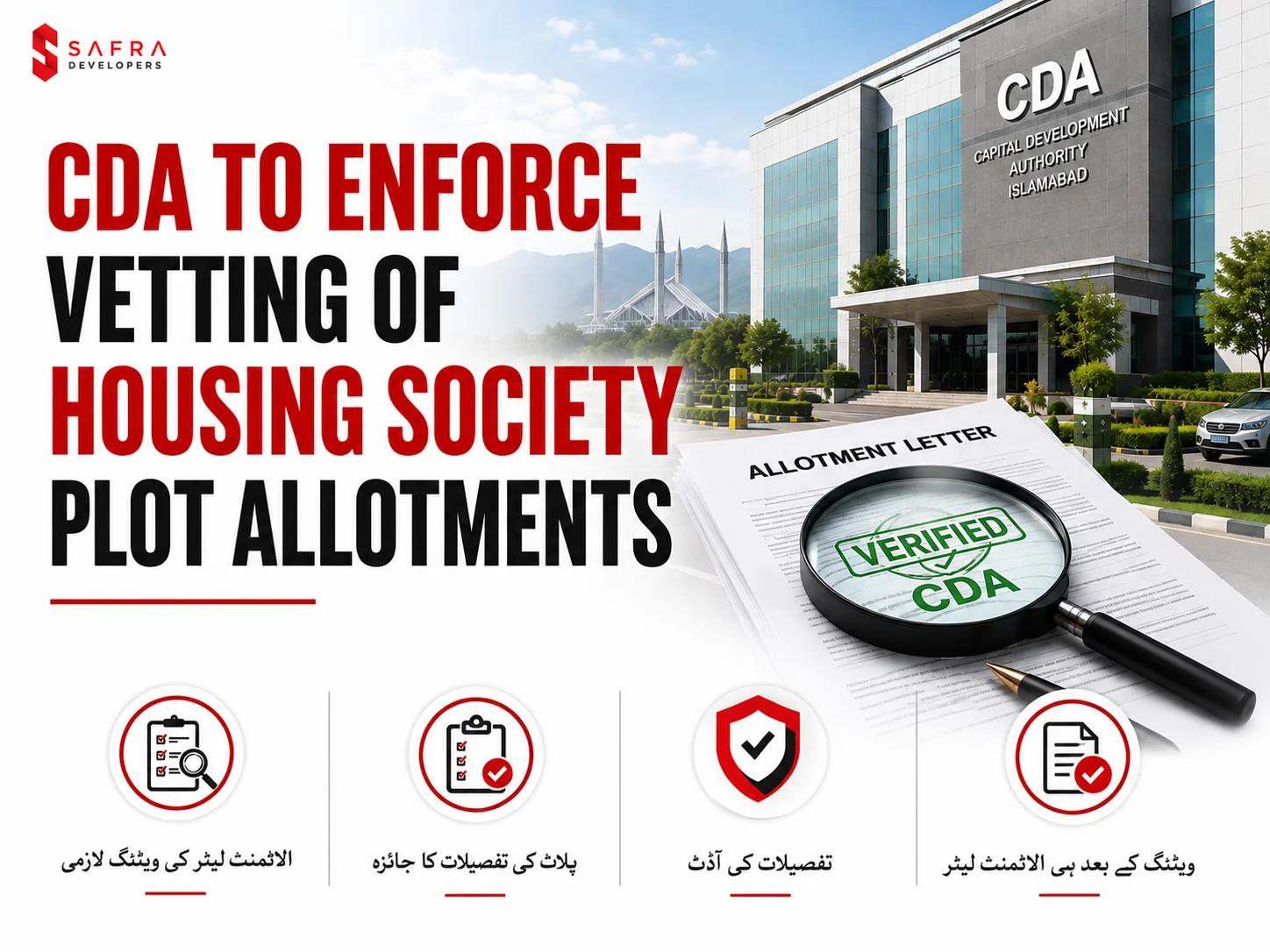
The Capital Development Authority (CDA), as a step to regularize housing societies, has introduced a set of new rules for plot allotments to allottees, which require mandatory vetting of allotment letters and displaying LOPs to increase process transparency for buyers.
The CDA Planning Wing is following the National Accountability Bureau (NAB) conclusions, which state that most private housing developers do not display their approved Layout Plan or they continue displaying outdated LOPs, which misguide the buyers and lure them into illegal housing projects.
Mandatory Vetting Of Allotment Letters
According to the new rules, CDA will vet the allotment letters issued by a housing society before allotment. The CDA will examine and audit the details of the plot before giving a heads-up on any allotment letter. The plots lying under the layout plan approved by the society will be acceptable. This will prevent scams by preventing allotment of illegal plots. In general, this practice can help curb the following main frauds in the property market:
- Over-invoicing: Buyers are charged more than the official record of the value of a plot.
- Selling of Fake Plots: Societies assigning land that they do not legally possess or have not yet purchased.
The specific guidelines include:
- Allotment letters issued by sponsors shall not be valid unless verified by the concerned Director (Planning) or an officer of minimum rank of Director specifically authorized by the Member (Planning & Design), CDA.
- The concerned Directorate in the Planning Wing will verify through CDA’s MIS or ERP system that only plots physically falling within an approved layout plan are allotted or transferred.
- Units included in an approved building plan for apartment buildings or standalone commercial projects shall be eligible for allotment or transfer.
- No plot or unit not covered by an approved plan shall be eligible for allotment or transfer until all the required conditions are fulfilled and the relevant regulations complied with.
Guidelines for Private Housing Developers
In addition to the cross-examination of allotment letters by CDA, a set of new guidelines for private housing developers has also been introduced to make the process fairer and risk-free. Some of these rules include:
- Developers will have to upload the approved layout plans followed by regular updates on their official websites.
- Display approved plan and current project status in prominent locations at reception areas of project sites and booking offices.
- Please include a QR code that takes them directly to the project’s official website so they can get the latest, most detailed information on the spot.
Advantages Of New Rules
The newly introduced rules and guidelines are important since they offer the following advantages:
- Stop developers from selling plots or units that are not there on an approved plan.
- Lessening the probability of using outdated or fraudulent layout plans to mislead purchasers.
- Offering buyers a simple, verified way to check the real status of a project before paying (through QR code and vetted allotment letters).
The rules put forward by CDA, in addition to NAB’s focus on the private development sector, add transparency to the development and marketing of private housing projects. This would control how the project is displayed to the buyers through LOP display and prevent fraudulent plot sales through allotment letter vetting by CDA.