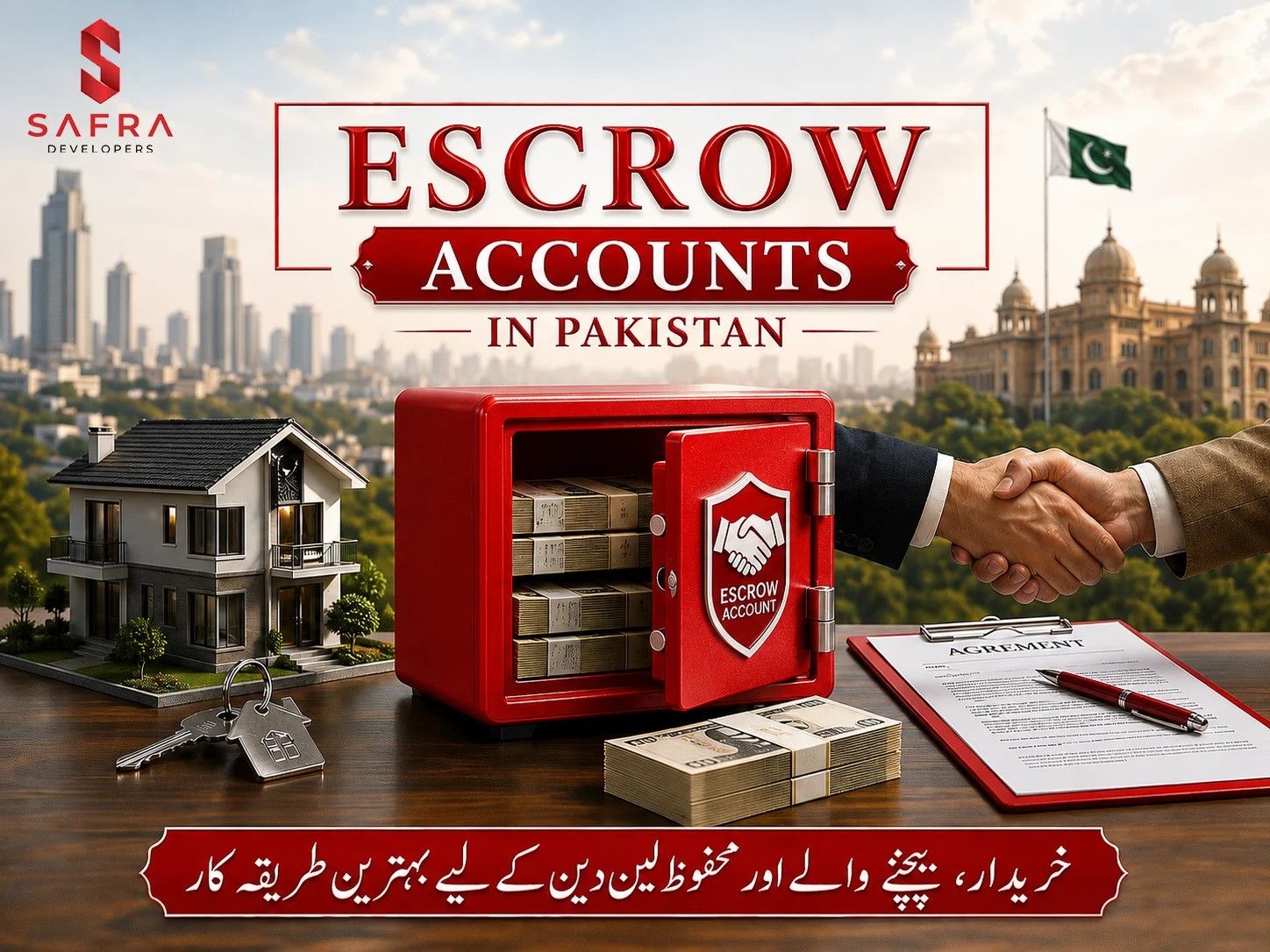
The rise of escrow accounts in Pakistan can offer a new level of security for both buyers and sellers. Traditionally, large transactions like buying a home or investing in a new development required blind hope. You had to trust that the other party would deliver what they promised after receiving your money. An escrow account changes that by introducing a neutral third party—a "financial referee" who holds the funds until all conditions of the deal are met.
This guide will explain how these accounts work and why they are becoming essential in the Pakistani market.
What is an Escrow Account?
At its simplest, an escrow account is a secure holding account managed by a neutral third party, often called an escrow agent. This agent can be a bank, a law firm, or a licensed escrow company. The purpose of this arrangement is to solve the problem of trust in big transactions.
Imagine you are buying a car from someone you don't know online. You don't want to pay before you get the car, and the seller doesn't want to give you the car before they get paid. To solve this, you both agree on a third party. You give the money to them. Once the seller delivers the car and you confirm it’s in the promised condition, the third party releases the money to the seller. In a professional setting, this "third party" is the escrow account.
How Escrow Accounts Work?
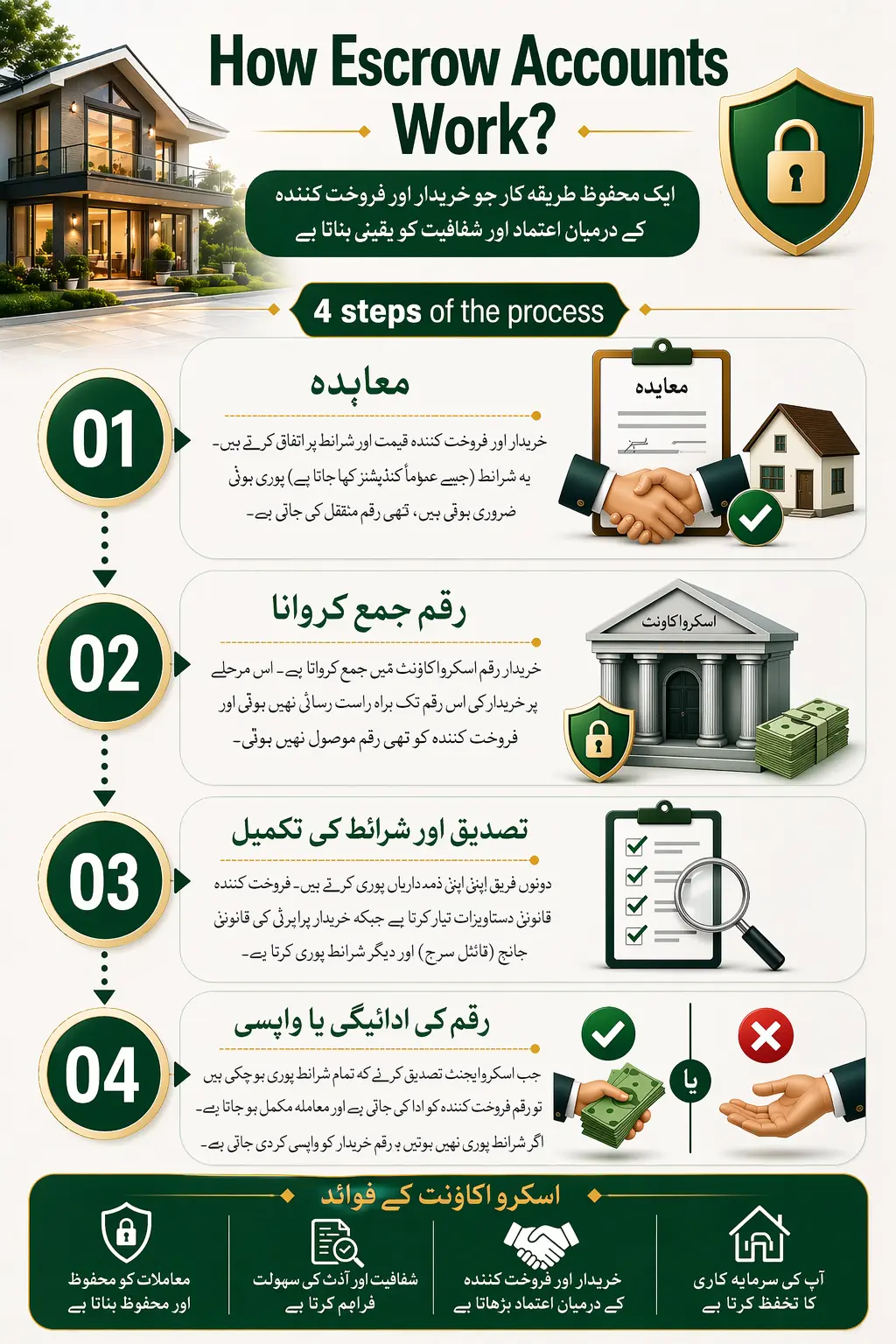
The process is designed to be transparent and auditable, following these four steps:
- Agreement: The buyer and seller agree on a price and specific conditions (often called "contingencies") that must be met before the money changes hands. For example, a buyer might insist that a property pass a professional inspection.
- Depositing Funds: The buyer deposits the payment into the escrow account. At this stage, the buyer no longer has direct access to the money, but the seller hasn't received it yet either.
- Verification: Both parties work to fulfill their obligations. The seller might prepare legal documents, and the buyer might conduct a title search to ensure the property is legally clear.
- Release or Return: Once the escrow agent confirms all conditions are satisfied, the funds are released to the seller, and the deal is complete. However, if the conditions are not met, for instance, if the property has a hidden legal defect, the agent returns the money to the buyer. This prevents disputes and ensures no one loses their money to a bad deal.
The Role of Escrow Accounts in Pakistan
The introduction of escrow accounts in Pakistan is particularly significant for the real estate sector. For years, the market has struggled with a lack of transparency. A common problem involved developers collecting huge sums of money from the public for "off-plan" projects (homes not yet built) and then diverting those funds to other projects or personal gains. This left thousands of buyers without their life savings and with no home to show for it.
To fix this, the government is moving toward mandatory escrow accounts for property developers. Under these new regulations, when you buy a flat in a new project, your money goes into a bank-held escrow account rather than directly to the developer. The developer can only access those funds in stages, which are tied to verified construction milestones. For example, they might receive a portion of the funds only after the foundation is finished and inspected.
This system mirrors successful models in global markets like Dubai, where the "Trust Account Law" helped build massive investor confidence by ensuring developers were held accountable.
Why This Matters for Pakistani Investors
The shift toward escrow accounts in Pakistan offers several critical benefits:
- Mitigating Fraud: Escrow acts as a shield against scams. Because the funds are held by a regulated bank, developers cannot "disappear" with the money or use it for unauthorized purposes.
- Encouraging Overseas Investment: Many overseas Pakistanis want to invest in their homeland but are afraid of being scammed remotely. A transparent escrow system gives them the confidence to invest, knowing their remittances are protected by a legal framework.
- Reducing Legal Disputes: Pakistan currently has over 1.8 million pending court cases, with a huge majority related to property disputes. By ensuring that money only moves when conditions are met, escrow prevents the very issues that lead to years of litigation.
- FATF Compliance: Implementing these transparent financial tools helps Pakistan align with international standards, such as those set by the Financial Action Task Force (FATF), which requires better regulation of the real estate sector to prevent money laundering.
Risks and Considerations
While escrow is a powerful tool for protection, it is not without its own set of rules. Users should be aware of:
- Service Fees: Escrow agents charge a fee for their services, which is usually split between the buyer and seller or paid by the party initiating the service.
- Potential Delays: Because funds are only released after verification, any delay in inspections or paperwork will hold up the payment. However, this is usually seen as a safety feature rather than a flaw.
- Verification: It is vital to ensure that the escrow service is provided by a regulated bank or a licensed institution. One should never use an escrow service suggested solely by the other party without independent verification.
Conclusion
The adoption of escrow accounts in Pakistan marks a "cultural shift" from an era of informal, handshake-based deals to a modern, accountable, and professional market. For the average citizen, it means that buying a home or a plot of land no longer has to be a gamble. By removing the need for blind trust and replacing it with a structured, bank-verified process, escrow protects the life savings of buyers and the interests of honest developers.
As the government continues to refine these regulations, the real estate landscape will become increasingly secure and attractive to both local and international investors. If you are planning a major transaction, the most important question you can ask is: "Who is holding my money?" If the answer is a regulated escrow account in Pakistan, you can proceed with the peace of mind that your investment is in safe hands.