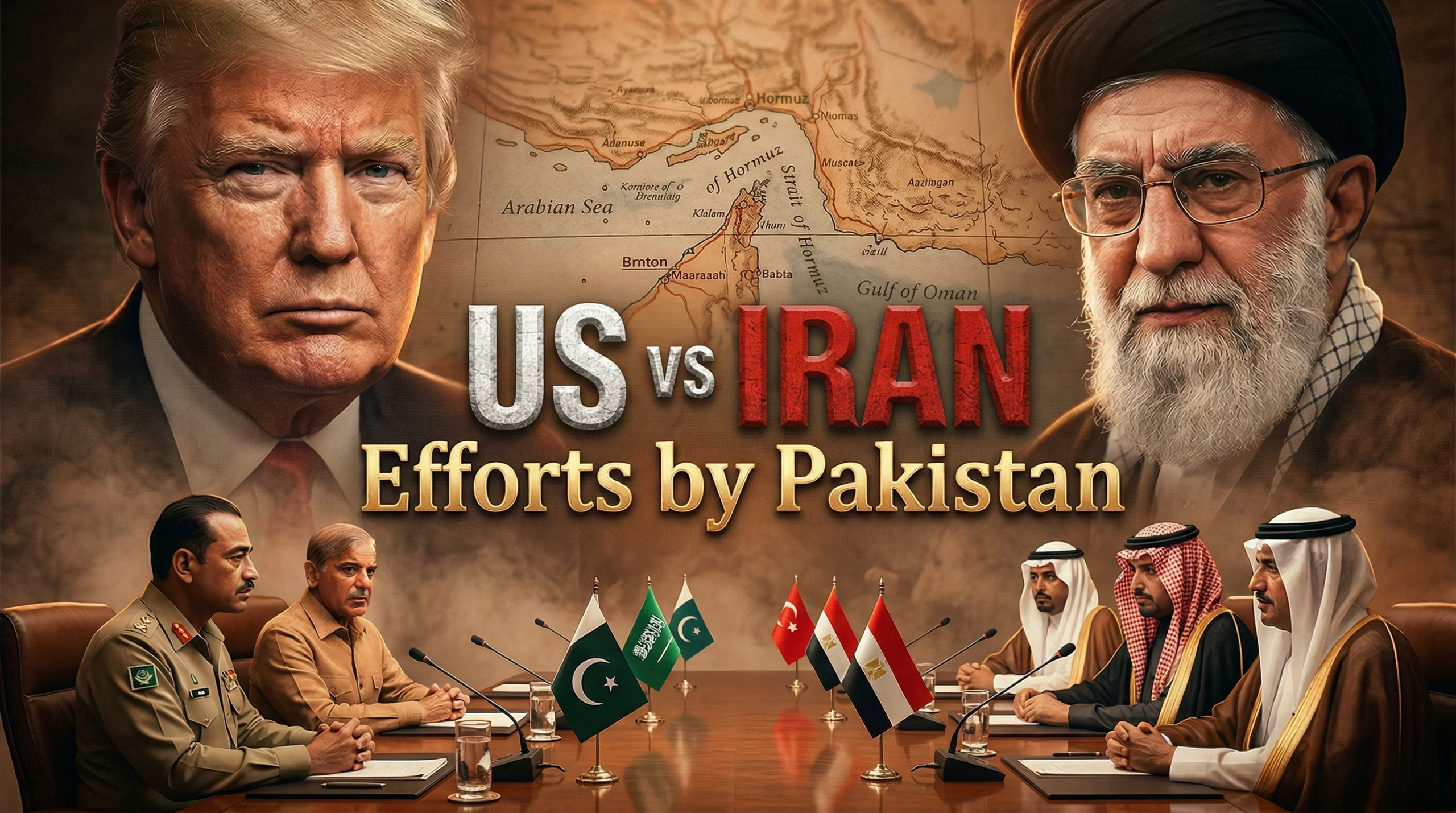
The year 2026 has brought conflicts and economic stress to the global setting. Currently, the hot topic in the news and among experts is the US-Iran war. Over a month has passed, yet the conflict is showing no signs of slowing down. In this scenario, Pakistan has emerged as a key mediator, making efforts to stop the war, which has gained international attention since last week.
US-Israel-Iran War 2026
Discussed below are the main events of the recent Iran-US conflict:
- The United States and Israel made the first attack on Feb 28, 2026, in multiple cities of Iran, targeting a girls' primary school, civil and military institutions and leadership residencies. Several high officials, including Supreme Leader Ayatullah Khamenei, were killed. The initial 900 attacks on Feb 28 targeted the following main cities:
- Tehran
- Khermanshah
- Shiraz
- Isfahan
- Karaj
- Zanajan
- Bushehr
- Qom
- Tabriz
- Since 28 Feb, a series of attacks have been carried out against Iran. The US named the attack operation Epic Fury, which was launched due to the following reasons
- To prevent Iran from developing nuclear weapons
- To bring a more pro-US government to office
- To prevent any future threat to the region from Iran’s missile program.
- The operation Epic Fury has resulted in approximately 3500 people being killed.
- Iran has also made several counterattacks where it has targeted Israeli cities, U.S. bases, water filtration plants, energy systems and commercial buildings in Gulf states such as the UAE, Qatar, Saudi Arabia, Bahrain, Kuwait and Oman.
- In response to the US and Israeli strikes, Iran has blocked the transportation through the Strait of Hormuz. This is a narrow passage at the end of the Persian Gulf, which is the main route for the supply of energy and other resources from the Gulf states. This blockage has resulted in a spike in oil and gas prices of about 40%.
- The Iranian proxy groups, such as Hezbollah and Houthis, have entered the war and have made attacks on Israel. So far, Israel has launched attacks on Lebanon in response to strikes from Hezbollah. Also, Houthis have threatened to block Bab al Mandab.
Pakistan’s Mediatory Efforts In US Iran Conflict
In this war, Pakistan has emerged as a key ally to both conflicting parties due to its relationship, location and efforts it has put forward in resolving this issue.
Hosting Peace Talks
Pakistan offered to host peace talks between Iran and the US and to reach a ceasefire on the issue. Both parties have apparently shown their willingness to talk, and the date on which they will be held is yet to be decided. According to Pakistan's Foreign Minister Ishaq Dar,
“Pakistan will be honoured to host and facilitate meaningful talks between the two sides in the coming days for a comprehensive settlement of the ongoing conflict.”
Backdoor Communications
Pakistan has been playing the middleman in the message transfer between Iran and the US for a ceasefire. Currently, Pakistan has sent the US terms for a ceasefire to Iran and Iran’s terms to the US. Although Iran has rejected US terms, Pakistan still holds the role of key communicator between these two parties.
Promoting Regional Involvement
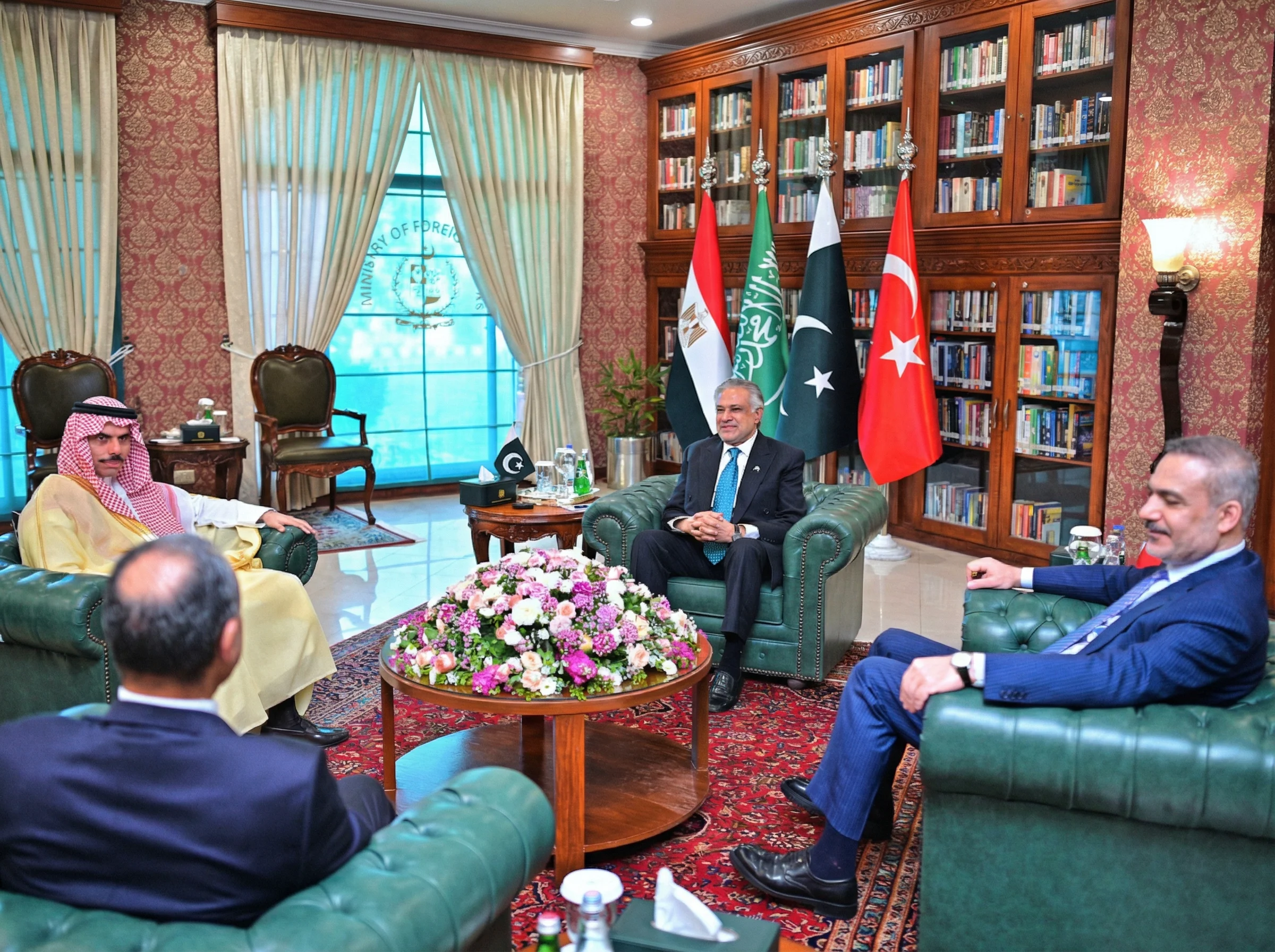
Pakistan has not only been in contact with Iran and the US, but also has been in close contact with other stakeholders in the region. Regional peace is a matter of concern for all the neighbouring parties, and so Pakistan has been using its diplomacy to stir up other countries as well. Pakistan is hosting a two-day quadrilateral meeting between foreign ministers of Egypt, Turkiye and Saudi Arabia.
France 24 quotes Egyptian Foreign Minister Badr Abdelatty as saying that these meetings aim to make direct contact between Iran and the US without the need for a mediator.
The quadrilateral meeting between Egyptian Foreign Minister Badr Abdelatty, Turkish Foreign Minister Hakan Fidan, Saudi Foreign Minister Faisal bin Farhan Al Saud and Pakistani Foreign Minister Ishaq Dar is expected to end on 31st March, 2026.
Furthermore, China has supported Pakistan’s efforts in mediation, as the Chinese Foreign Ministry Spokeswoman said,
"We commend Pakistan for its efforts for de-escalating the tensions."
Influencing war decisions
Pakistan is not only acting as a mediator to the problem through third-party messagings and talks but is also actively participating in influencing both parties to reduce further escalation. Pakistan has taken a strong stance that both parties should avoid violence and that a ceasefire should be achieved. According to Reuters,
“Israel removed Iranian Foreign Minister Abbas Araqchi and Parliamentary Speaker Mohammad Baqer Qalibaf from its hit list after Pakistan urged Washington to press Israel not to target them”
Unlike any other country, Pakistan is using its resources to limit any war events that can sabotage peace talks.
How Pakistan gained a Mediator Role in this War
The world scenario is based on many other countries which can play an active role in solving the current conflict. Why is the world regional and world peace dependent on Pakistan today? Some main reasons which have placed Pakistan in this position for effective mediation are discussed as follows
Pakistan's Neutral Stance
Since the beginning of this war, Pakistan has adopted a very neutral response. Where most countries have been siding with one party, Pakistan remained neutral through condemnation of attacks from both sides and endorsing the rightful stances of both parties on the issue.
Pakistan has previously been a partner of the US in counterterrorism and trade matters. At the same time, Pakistan's history with Iran goes back to its creation as neighbours and borders aligning. Pakistan and Iran have long been conducting trade activities and have always been on good terms.
For the last month, Pakistani diplomats and high officials, including the PM, the foreign minister and the field marshal, have made contacts with both Iran and the US.
Pakistan's Regional Position
In the region, other countries appear to be a party to the US due to US bases present, and some even being a NATO member. Iran considers many world organisations and institutions, such as the European Union, the UN, and the GCC, to be biased towards the US. This creates a trust deficit for the US and mainly for Iran.
Pakistan, in such a situation, hosts no US base and has managed to remain uninvolved in the issue while also being a stakeholder for the regional peace due to its direct border with Iran. This has led to filling the gap due to trust deficit and makes Pakistan trustworthy toa Iran.
Unwillingness by other states
Many other states, such as China and Russia, that have the capacity to mediate are not willing to deeply engage in the crisis and have resorted to providing minor diplomatic assistance. Other affected states, such as Qatar and Saudi Arabia, have also encouraged Pakistan to de-escalate tensions between Iran and the US.