

The real estate sector in Pakistan is undergoing its most significant transformation yet. Investors and common citizens have been struggling with scams, "Qabza" groups, and paper-based fraud. However, the Punjab Government has finally taken a stand to protect the public's life savings. The recent ban on open files in Punjab is a historic reform designed to eliminate the manual, corrupt systems of the past and replace them with a secure, digital future. This move ensures that every transaction is tracked and every plot actually exists.
What Was the "Open File" System?
Before we look at the new rules, it is important to understand what went wrong. The "open file" model was a system where housing societies sold files—essentially just pieces of paper—promising a plot in the future.
- No Plot Guarantee: Buyers often paid in installments for 5–10 years without knowing whether a plot actually existed.
- Excess Selling: This was the most common form of fraud. A developer might have land for only 50 plots but would sell 200 to 300 files to unsuspecting buyers.
- Lack of Legal Clarity: Because these files were not registered with the government, they lacked solid legal standing, making it easy for "mafias" to loot people.
- Targeting the Vulnerable: Widows, low-income families, and overseas Pakistanis were frequently targeted by these fraudulent schemes.
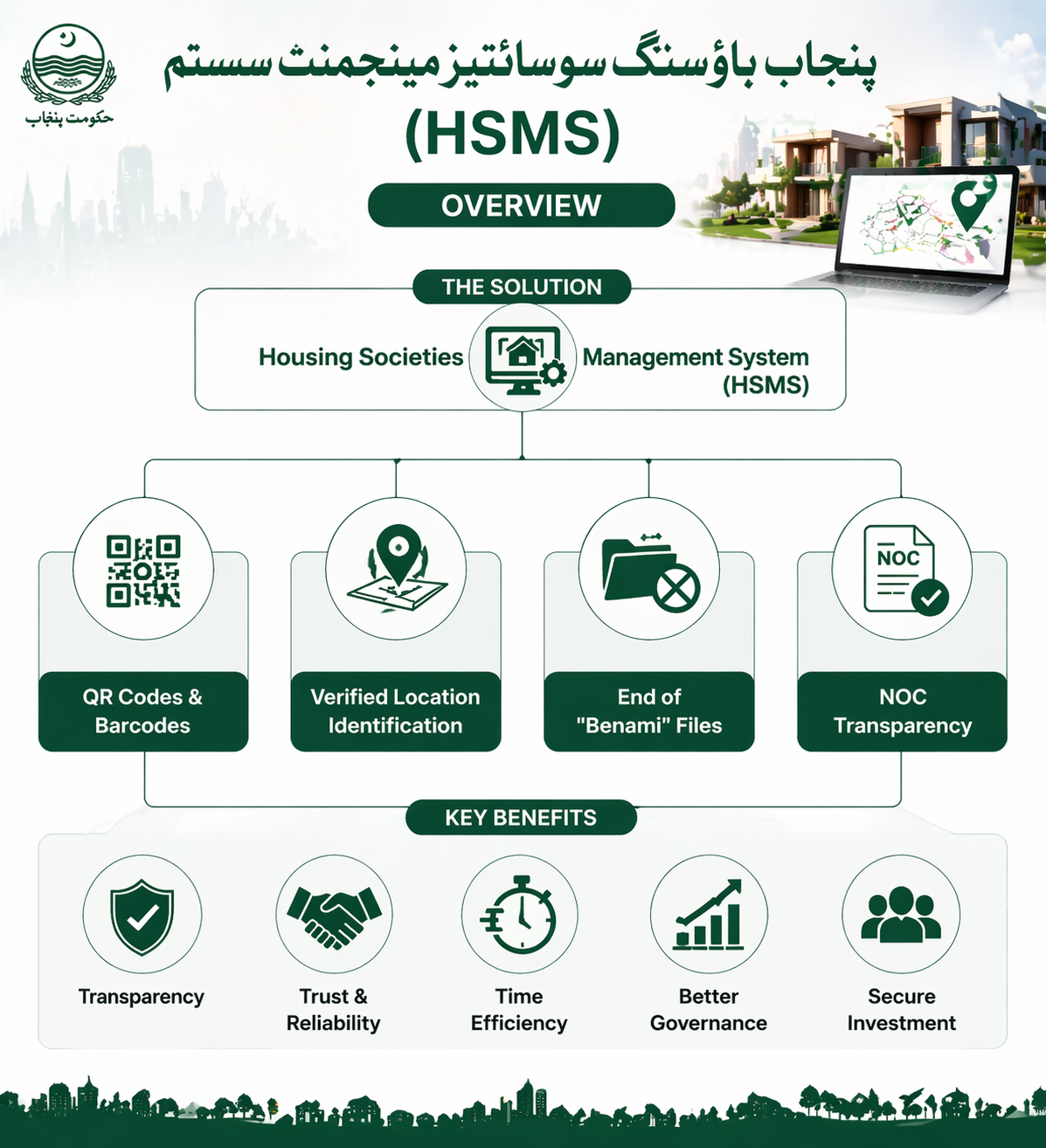
The Solution: Housing Societies Management System (HSMS)
To solve this issue, Housing Minister Bilal Yasin and the Punjab Government have introduced the Housing Societies Management System (HSMS). This is an official digital portal that will link every single plot sale to a verified database.
Key features of HSMS include:
- QR Codes and Barcodes: Every file will now come with a QR code or barcode. Buyers can scan this to instantly verify the plot’s location and existence.
- Verified Location Identification: Plots can now only be purchased on the basis of a verified location and an official letter from the Punjab Land Records Authority (PLRA).
- End of "Benami" Files: The system makes it impossible to trade illegal or unregistered "benami" files.
- NOC Transparency: No-objection certificates (NOCs) for housing societies will now be issued within a strict 90-day window to ensure projects are legal from the start.
Many investors have welcomed this change, noting that the ban on open files in Punjab will finally stop property agents from looting the hard-earned money of regular citizens.
e-FOAS: Digitizing Government Offices
The reform is not just for private developers; it starts within the government itself. Since October 2025, the Punjab Government has banned physical files in the Civil Secretariat and other offices. They now use the e-Filing & Office Automation System (e-FOAS), developed by the PITB.
- Real-Time Tracking: Every document is uploaded to a digital cloud. Files are tracked in real-time, and they cannot be "hidden" or lost.
- Automatic Alerts: If an official delays a file for too long, an automatic alert is sent to higher authorities to ensure accountability.
- Transparency and Efficiency: Tasks that used to take weeks, such as property transfers or building approvals, are now being completed in a fraction of the time.
- Corruption Control: By reducing manual interference, the system significantly cuts down on bribery and manipulation.
Punjab Property Law 2026: Tough New Penalties
To back up these digital reforms, the government has introduced Punjab Property Law Amendments, such as the Punjab Protection of Ownership of Immovable Property (Amendment) Ordinance 2026. This law treats land grabbing and real estate fraud as serious criminal offenses rather than just civil disputes.
The penalties for fraud and illegal occupation are now severe:
- Direct Possession by Fraud or Force: 5 to 10 years of imprisonment plus a fine of up to Rs. 10 Million.
- Conspiracy and Abetment: Those who help or plan the fraud (including developers or agents) face 1 to 3 years in jail and a Rs. 1 Million fine.
- Expanded Liability: The law now applies not just to individuals, but also to companies, corporations, trusts, and societies.
- Specialized Tribunals: New "Punjab Property Tribunals" led by Additional Sessions Judges have been created to ensure speedy justice and bypass traditional court backlogs.
With the ban on open files in Punjab, these legal measures provide a "digital shield" that protects the ownership rights of every citizen.
How This Benefits the General Public
The shift from paper to digital is a major win for the "common man." Here is what you can expect from this new era of transparency:
- Peace of Mind: When you buy a file, you can physically go and see your plot because it is officially allocated from day one.
- Safe Investment: You will have a clear record of how many installments are paid and how many are remaining through the online portal.
- Faster Processing: Whether it is the RDA in Rawalpindi or the LDA in Lahore, building approvals and licensing are moving online, making the process faster for homeowners.
- Market Trust: As fraud is eliminated, the real estate market becomes more stable and attractive for genuine buyers and overseas investors.
Implementation and Challenges
This reform process has already begun. In the first phase, the housing society file system is being abolished in Lahore. It will then be expanded to other districts across Punjab. Authorities like RUDA and the Local Government Department have been directed to implement these legal amendments immediately.
However, some challenges remain. There is currently no clear system to compensate those who were victims of fraud before these new rules were implemented. Many people have lost their life savings to older scams, and while the government is moving fast to protect future buyers, the recovery of past losses is still a pending issue.
Conclusion
The Punjab Government’s move toward digital governance is a bold step in the right direction. By combining advanced technology like HSMS and e-FOAS with the strict penalties of the 2026 Property Ordinance, the province is finally reducing the power of the "Qabza Mafia".
If you are planning to invest in property, you no longer have to rely on vague promises and risky paperwork. The new system ensures that your investment is secure, your plot is real, and your rights are protected by law. This revolutionary ban on open files in Punjab is more than just a policy change; it is a commitment to honesty, accountability, and the long-term prosperity of the people.