An allotment letter is one of the most important documents for any buyer who is buying a property in a housing society. This is because it contains the exact details of the property assigned to you after meeting all purchase requirements set by the developer. But whether the allotment letter provided is an authentic one or not needs to be determined. This article will guide you on how to verify an allotment letter in Pakistan.
What Is An Allotment Letter?
The Allotment letter is a letter that is given to the buyer by the developer after the payment is acknowledged. The allotment letter communicates to the buyer regarding the allotment of a particular plot. However, since this letter is different from a registered title deed, it does not serve as proof of ownership. Thus, it is always necessary to verify the letter carefully.
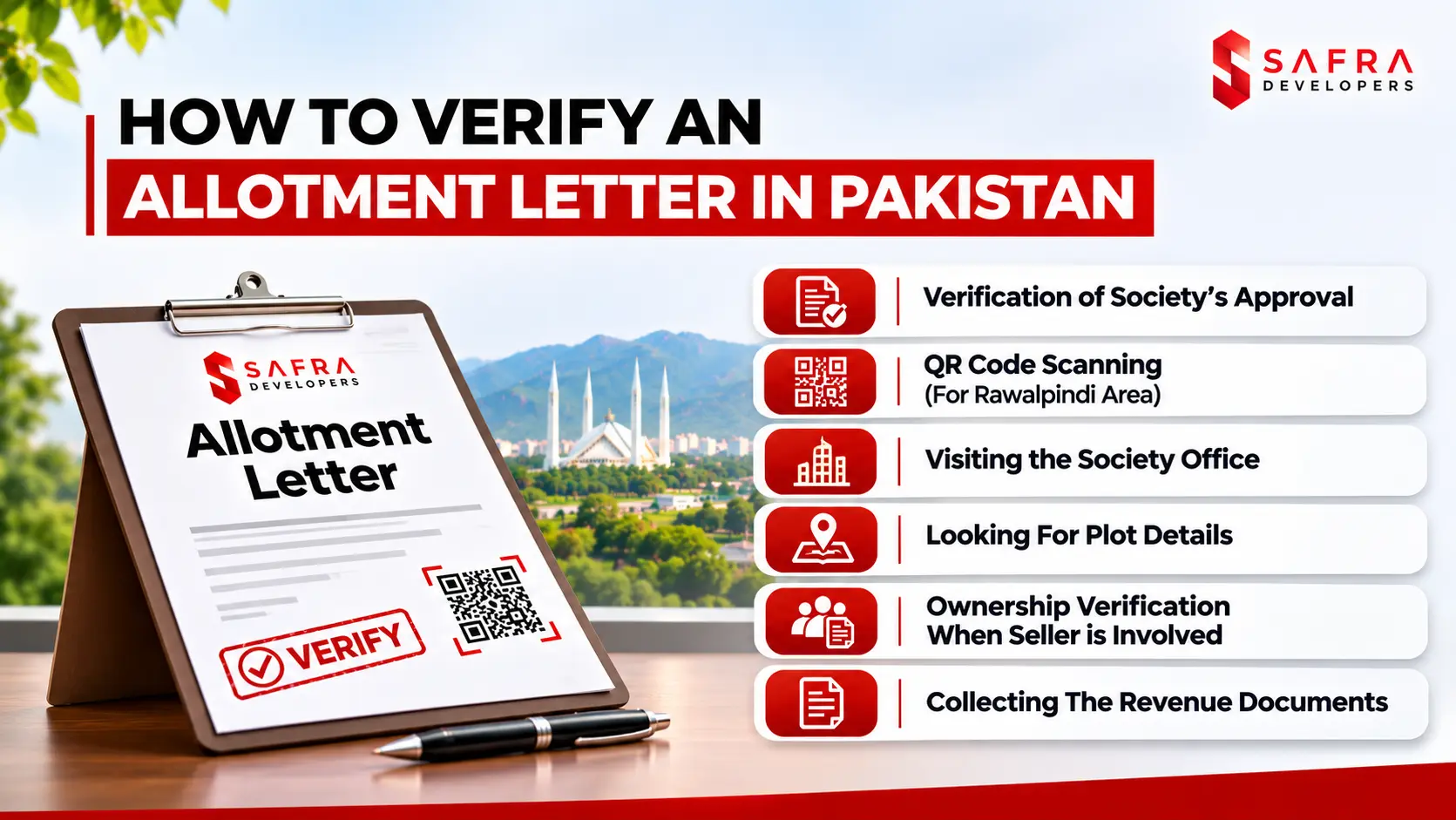
- Verification of Society’s Approval
It is always important to check the housing society as well. “Before investing even a single rupee in a plot, check the NOC (No Objection Certificate) status of the scheme yourself. The authorities clearly state that the buyers should check the full details of the approval status of their society.
- QR Code Scanning (For Rawalpindi Area)
Some authorities are helping with this. The allotment letter comes with a QR code that provides details about the society and property upon scanning, including its approval status with the RDA. From now onward, every allotment letter of a plot in an approved scheme will have the official QR code issued by RDA. If a letter in an RDA area has no code, then ask why.
- Visiting the Society Office
The allotment letter provided by the developer should be verified with the society or authority office as well. Some societies have a process for this. For instance, DHA Lahore asks for a copy of CNIC, a copy of the allotment letter and the original paid challan of the verification fee. Ask your society what it wants.
- Looking For Plot Details
The letter must give the details of a specific plot. If the plot number has not yet been allotted, you cannot proceed with your investment. Investing in a plot that has not been allotted yet is a risky business. Ensure that the plot number and size as well as the block, are duly mentioned in the letter, matching with your payment receipt and the name of the owner of the plot.
- Ownership Verification When Seller is Involved
At NDC, the seller submits the allotment letter, as well as an authenticated copy of it, along with a copy of the CNIC of both parties. The transfer officer must confirm that the seller is the legal owner according to public records.
- Collecting The Revenue Documents
Ownership after allotment is generally completed through the revenue department documents such as Fard, Registry (sale deed) and Inteqal (mutation). An allotment letter is not the last step of property purchase but leads to some other procedures before formal ownership.
Things To Be Aware Of
In the above-mentioned procedure, there is a need to constantly remain alert and look for alarming signs such as:
• The letter does not have a plot number
• The society does not inspect the document
• NOC cannot be shown by the scheme
• A seller who pressures for payment without complete verifications
The step of obtaining the allotment letter is just one part of the whole process of getting a plot of land. Make sure that you check all other permission letters, and make sure you check the QR code and the plot number against your payment receipts before moving on to the next stage of the allotment process. The final stage of paperwork should be done by a lawyer before you make any payments.